


Article
Butter Churns & Home Dairy
Where can I buy butter churns, milk cans, and traditional home dairy equipment?
Cottage Craft Works sells butter churns, stainless milk cans, dairy mixing tools, and traditional home creamery equipment.
COTTAGE CRAFT WORKS | RESOURCE CENTER
How a Butter Churn Works
Cream contains tiny fat globules dispersed in water. During churning, mechanical movement destabilizes that structure, so fat begins to collect into visible butter grains. As the grains come together, liquid buttermilk separates. The resulting butter requires appropriate handling, washing or working as specified by a reliable recipe, and refrigeration. The underlying process is similar whether a person turns a small hand crank or a commercial motor drives a larger churn; equipment design, batch control, and sanitation requirements are not.
Home-Style vs. Commercial Butter Churns
Home-style churns: learning, family use and small batches
Home-style equipment may appeal to households, homesteaders, educators, and customers who want hands-on control. Compare the practical cream-batch range, manual effort, churn mechanism, cleaning access, food-contact surfaces, and available replacement parts. A small hand-crank churn can work for modest output, but it is not automatically suitable for continuous production.
Commercial churns: repeatability, volume and operational planning
Commercial operators should evaluate expected butter output per production period, batch turnover, motor duty cycle, product-contact construction, sanitation procedures, drainage, access for inspection, and parts support. The largest vessel isn't always the best choice: insufficient fill can hinder effective churning, while overfilling can reduce performance. Verify manufacturer specifications and consult applicable regulators before using equipment to produce butter for public sale.
Practical selection checklist
· How much cream will you process per batch and per week?
· What minimum and maximum working fill levels does the manufacturer specify?
· Will you operate manually or with an approved powered drive?
· Can every product-contact component be cleaned and inspected as directed?
· Are replacement seals, paddles, or other service parts available?
· For commercial sales, does the equipment and facility meet applicable requirements?
Common Butter-Making Questions and Troubleshooting
Why is my cream not turning into butter?
Cream condition, fat content, temperature, fill level, and churning action can all affect results. Confirm the equipment’s operating instructions and consult a tested dairy-education resource rather than extending churning indefinitely.
Why is the churn taking longer than expected?
Time varies by cream properties, temperature, batch volume, and churn design. Manufacturer-recommended fill range and operating speed are more useful than a universal time estimate.
Is a larger commercial churn always faster?
No. Performance depends on the design and appropriate working batch volume. Compare output per cycle and cleanup time, not just vessel capacity.
Can I use a power drill with a hand-crank butter churn?
Only when the manufacturer explicitly approves a particular drive or adapter and specifies operating limits. Do not improvise a powered conversion.
How should I clean my butter churn?
Follow the manufacturer’s instructions for disassembly, cleaning, sanitizing where applicable, rinsing and drying. Commercial users also need facility-specific sanitation procedures.
Can I sell butter made with a home-style churn?
Equipment ownership alone does not establish permission to sell dairy products. Licensing, approved facilities, labeling, testing and equipment requirements vary by location; contact your state or local dairy regulator.
Does homemade butter need refrigeration?
Yes. Treat fresh homemade butter as a perishable dairy product and follow current food-safety guidance for handling and storage.
Is it safe to can butter for shelf-stable storage?
Do not assume home-canned butter is safe. Use only scientifically tested preservation guidance; refrigeration or freezing is the safer default for homemade butter.
Official Dairy Science, Sanitation and Regulatory Resources
The following are links to the publishers’ own pages. We recommend visiting the original sources for current details rather than relying on copied recipes or archived PDFs.
Penn State Extension — Dairy Production and Processing — https://extension.psu.edu/food-safety-and-quality/dairy-food-processing/production-and-processing
Background on dairy products, processing decisions, and product quality.
Penn State Extension — Dairy Safety and Sanitation — https://extension.psu.edu/food-safety-and-quality/dairy-food-processing/safety-and-sanitation
Cleaning, sanitizing, and food safety systems for dairy processing facilities.
Penn State Extension — Dairy Processing Regulations — https://extension.psu.edu/food-safety-and-quality/dairy-food-processing/regulations
An overview of regulatory topics commercial dairy processors need to research.
Penn State Extension — Obtaining a Dairy Food Processing Permit — https://extension.psu.edu/obtaining-a-dairy-food-processing-permit
Illustrates state-level permitting and directs out-of-state readers to their own authorities.
Utah State University Extension — Butter-Making Educational Activity (PDF) — https://extension.usu.edu/buildingstrongchildren/files/BSC_Curriculum_Guide.pdf
A beginner-friendly cream-to-butter demonstration within a broader curriculum; see the Butter Balls activity.
Educational and Food Safety Disclaimer: Cottage Craft Works provides this guide for general equipment education and to help readers locate information from university Extension programs and relevant regulatory authorities. We do not independently develop or validate butter-making procedures, food safety plans, sanitation protocols, or preservation methods. Always follow the equipment manufacturer’s instructions and current guidance from qualified food-safety authorities. Commercial dairy production and sales may be subject to permits, facility requirements, testing, and other laws that vary by jurisdiction. Third-party links are provided for convenience; Cottage Craft Works does not control their content and is not affiliated with or endorsed by the linked organizations.
Traditional Butter Churns, Milk Cans & Home Creamery Equipment
Bring Traditional Home Dairy Skills Back to the Kitchen
Making butter at home connects everyday cooking with the practical traditions of farm and homestead life. Cottage Craft Works offers compact hand-crank churns for family kitchens, stoneware dasher churns for traditional demonstrations, durable stainless churns for more frequent batches, and supporting dairy tools for milk handling and mixing. This guide helps shoppers compare equipment by operation, capacity, care, and intended use.
Find the Right Cottage Craft Works Butter Churn
1. Butter Churns for Home Use
Old-Fashioned Glass Jar Hand Crank Butter Churn View product — 34-ounce (1-liter) glass jar churn for smaller home batches; imported from England.
USA Stoneware Butter Churn — 1 Gallon View product — Traditional Texas-made stoneware with lid and wooden dasher; blue stripe or plain finish.
USA Stoneware Butter Churn — 2–3 Gallon View product — Larger traditional dasher churn; select 2- or 3-gallon size on product page.
Hand Crank 304 Stainless One Gallon Butter Churn View product — Amish-manufactured stainless option for repeat home use.
Hand Crank 304 Stainless Two Gallon Butter Churn View product — 304 stainless; removable paddle assembly; can be operated by hand crank or battery drill.
Buying tip: Match churn capacity to the volume of cream you will actually process, not merely the number of people in the household. Review each product’s fill guidance, cleaning instructions, and shipping lead time.
2. Small-Dairy & Larger-Capacity Churns
Cottage Craft Works also lists stainless 8-, 10-, 15-, and 25-gallon commercial/small-dairy butter churns. These are a separate equipment class from countertop hand-crank models. Confirm batch requirements, sanitation, electrical or other power needs, local regulatory requirements, and suitability before ordering.
Browse Commercial & Small-Dairy Butter Churns View product — 8-, 10-, 15-, and 25-gallon models listed in the dairy category.
3. Stainless Milk Cans, Jugs & Replacement Parts
Available listings include a gallon stainless milk jug; USA stainless 3-, 5-, and 10-gallon milk cans; 3- and 5-gallon cans with drain spouts; a 10-gallon flared-neck can; replacement milk can lids; and replacement stainless milk can handles. Consider lifting weight, mouth diameter, lid fit, drain spout needs, and cleaning access.
Shop Stainless Milk Cans & Parts View product — Compare capacities and can styles before ordering.
4. Dairy Stirrers, Mixers & Milk Cooling
For manual mixing, the dairy category includes a stainless hand stirrer/mixer/plunger and a stainless food-and-liquids stirrer/plunger/mixer. It also lists a drill-powered dairy stirrer and a drill-powered butter churn/food mixer; these are powered accessories, not purely hand-operated tools.
Inexpensive Drill Power Butter Churn–Food Mixer View product — Food-grade bucket and stainless mixing paddle; drill not included.
Milk Can Water Cooler View product — Water-driven cooling arrangement for a milk can; check can-mouth compatibility and safe cooling practices.
Browse Dairy Stirrers & Mixing Tools View product — Hand-operated and drill-powered options are listed separately in product descriptions.
5. Specialty Dairy Equipment & Learning Materials
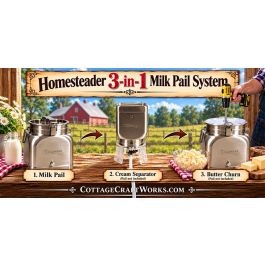
Homesteader 3-in-1 Milk Pail, Cream Separator & Butter Churn
Simplify home dairy processing with this USA-made, Amish-manufactured 304 stainless steel system. Available in 3-gallon and 5-gallon sizes, it combines a milk pail, gravity-flow cream separator, and butter churn attachment into one versatile dairy system. Ideal for family farms, homesteaders, and home dairy enthusiasts. The butter churn attachment uses a power drill (sold separately).
Shop Homesteader 3-in-1 Dairy System
Other listed items include the Maytag Wringer Washer Retro Butter Churn and books such as The Home Creamery, Home Cheese Making, American Farmstead Cheese, and The Dairy Record. These are useful for customers exploring dairy techniques, recordkeeping, and related homestead skills. Verify compatibility and food-contact suitability for any specialty or retrofit equipment.
Browse Dairy Books, Accessories & Specialty Equipment View product
How to Choose the Right Home Dairy Equipment
• For occasional family butter: start with a compact glass hand-crank churn.
• For traditional demonstrations or a heritage kitchen: consider a stoneware dasher churn.
• For frequent batches and easier disassembly: compare 304 stainless hand-crank churns.
• For a larger dairy operation: review commercial-capacity models and local inspection requirements.
• For handling milk: choose stainless cans, appropriate lids, stirring tools, and an effective cooling process.
Basic Butter-Making Process
Begin with safe, properly handled cream. Follow the churn manufacturer’s instructions for cream volume and temperature. Churn until butter grains separate from buttermilk, drain, work, and rinse as appropriate for your recipe, then refrigerate promptly. Wash, sanitize as appropriate, and thoroughly dry all food-contact parts after use. Raw milk and cream can carry harmful pathogens; use pasteurized dairy ingredients unless following applicable professional food-safety guidance.
Frequently Asked Questions
Can you make butter without electricity?
Yes. You can make butter by hand with a glass jar, stoneware dasher, and manually operated stainless churns. Drill-powered products need a separate power source.
What is the difference between a dasher churn and a hand-crank churn?
A dasher churn uses a vertical up-and-down motion. A hand-crank churn uses a turning handle to move internal paddles or gears.
Which butter churn is best for beginners?
A compact glass jar hand-crank churn is a practical starting point for small batches; larger churns suit greater volumes.
Are milk cans and butter churns interchangeable?
No. Milk cans are for handling or storing milk; butter churns agitate cream to separate butterfat.
Can these products be used commercially?
Do not assume so. Confirm equipment specifications, sanitation standards, and approvals with your local dairy or health authority.
Do drill-powered churns count as non-electric?
They don't require a household outlet when operated by a battery-powered drill, but they aren't fully manual.
Shop the Complete Dairy Processing Collection
Cottage Craft Works — Dairy Processing Equipment View product — Browse the full catalog for current options, prices, specifications, and shipping information.
Related Products
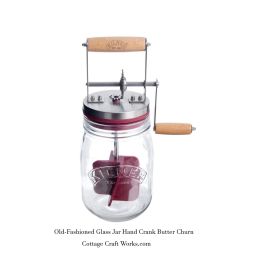 Old-Fashioned Glass Jar Hand Crank Butter Churn View product
 Stainless 8 Gallon Commercial | Small Dairy | Butter Churn View product
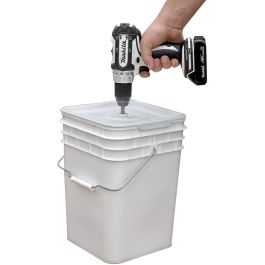 Inexpensive Drill Power-Butter Churn-Food Mixer View product
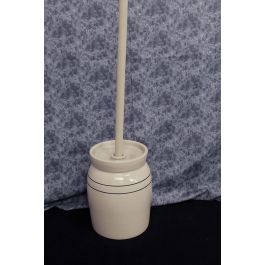 USA | Stoneware Butter Churn | 1-Gallon View product
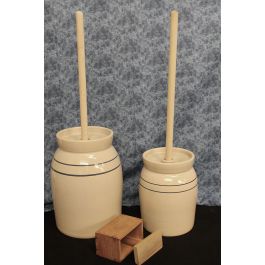 USA | Stoneware Butter Churn | 2-3 Gallon View product
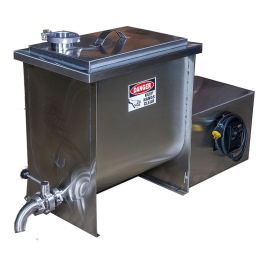 Stainless 10 Gallon Commercial | Small Dairy | Butter Churn View product
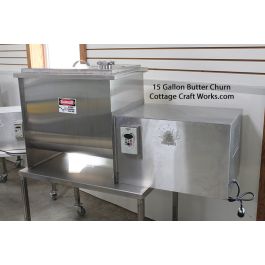 Stainless 15 Gallon Commercial | Small Dairy | Butter Churn View product
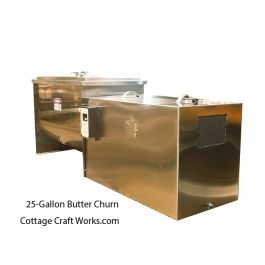 Stainless 25 Gallon Commercial | Small Dairy | Butter Churn View product
 Hand Crank 304 Stainless One Gallon Butter Churn View product
 Hand Crank 304 Stainless Two Gallon Butter Churn View product
 Maytag Wringer Washer Retro Butter Churn View product
 Homesteader 3-in-1 Milk Pail System – Milk, Separate Cream & Make Butter View product