


Article
Bleeding Taperlock Hydraulic Brakes & Adjusting the Master Cylinder
How do you bleed Taperlock hydraulic brakes on a horse-drawn buggy or carriage?
Fill the master cylinder, bleed one side at a time while pumping until fluid flows steadily, hold the pedal fully down while closing the bleeder, repeat until the line is free of air, then verify pedal resistance, fluid level, and a snugly closed bleeder.

Resource 4
Proper bleeding is essential to safe hydraulic brake operation. The master-cylinder relief port must also remain uncovered so pressure can release.
Bleeding Procedure
1. Fill the master cylinder with the appropriate brake fluid to approximately 1/4 inch from the top.
2. Open one bleeder at a time and pump the brake pedal until a steady flow of fluid appears.
3. With the pedal fully depressed, close the bleeder valve. A helper can hold the pedal, or the pedal can be held down securely while the bleeder is closed.
4. Repeat the pumping and closing sequence until there is no air in the brake line.
5. When pedal resistance is appropriate, recheck the fluid level, refill to approximately 1/4 inch from the top, and make sure the bleeder bolt is closed snugly.
The Weavertown instructions give a direct warning: brakes will fail if they are not properly bled.
Adjusting the Master Cylinder
The rubber seal must not cover the master-cylinder relief port, or the brakes will not release. The catalog states that this relationship is controlled by adjusting the plunger rod.
Reusing Old Shoes with New O-Ring Pistons
When older brake shoes are reused with newer O-ring pistons, the catalog instructs that a notch may need to be ground into the shoes to clear the piston and dirt cap. New shoes are manufactured with this clearance notch.
Safety Disclaimer
Brake installation, adjustment, hydraulic service, and repair are safety-critical work. These resource pages summarize the referenced Weavertown Coach Shop material for educational and service-reference purposes. Vehicle condition, axle machining, hub style, brake size, and prior modifications can change the correct procedure. Work should be performed by a mechanically qualified person familiar with hydraulic drum brakes. Inspect the complete system and test braking operation in a controlled area before returning a horse-drawn vehicle to service. Never rely on the vehicle brakes as a substitute for proper horse control, harnessing, driving technique, or safe operating practices.
Cottage Craft Works.com
Technical information adapted from the Weavertown Coach Shop catalog, Bird-in-Hand, Pennsylvania, with credit and permission from Weavertown Coach Company.
Downloads
Frequently Asked Questions
How full should the master cylinder be?
Should both bleeders be opened together?
Why might brakes fail to release after bleeding?
Related Products
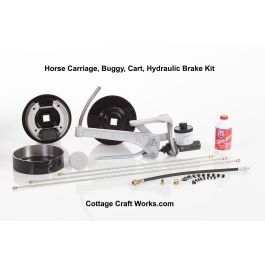 Horse Carriage, Cart, Drum Brake Kit View product
  Horse-Drawn Vehicle Hydraulic Brake Shoes View product
 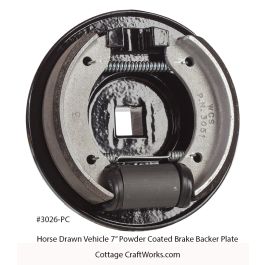 Horse Drawn Vehicle Brake Assembly View product
  Horse Drawn Vehicle Hydraulic Brake Master Cylinder View product
  Horse Drawn Vehicle Brake Components View product
  Horse Drawn Vehicle Brake Drum View product