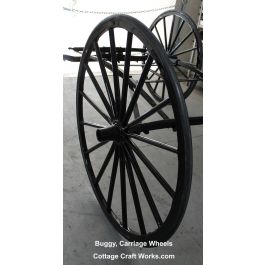


Article
Wooden Carriage & Buggy Wheel Maintenance: Spokes, Felloes, Hubs & Tires
How do you maintain wooden carriage, buggy and wagon wheels?
Inspect the complete wooden wheel, including the hub or nave, every spoke, the felloes and the steel or rubber tire. Look for looseness, cracks, rot, open joints, tire movement and wheel wobble. Persistent looseness or structural damage should be evaluated by an experienced wheelwright rather than temporarily hidden by swelling the wood with water.
Resource 3
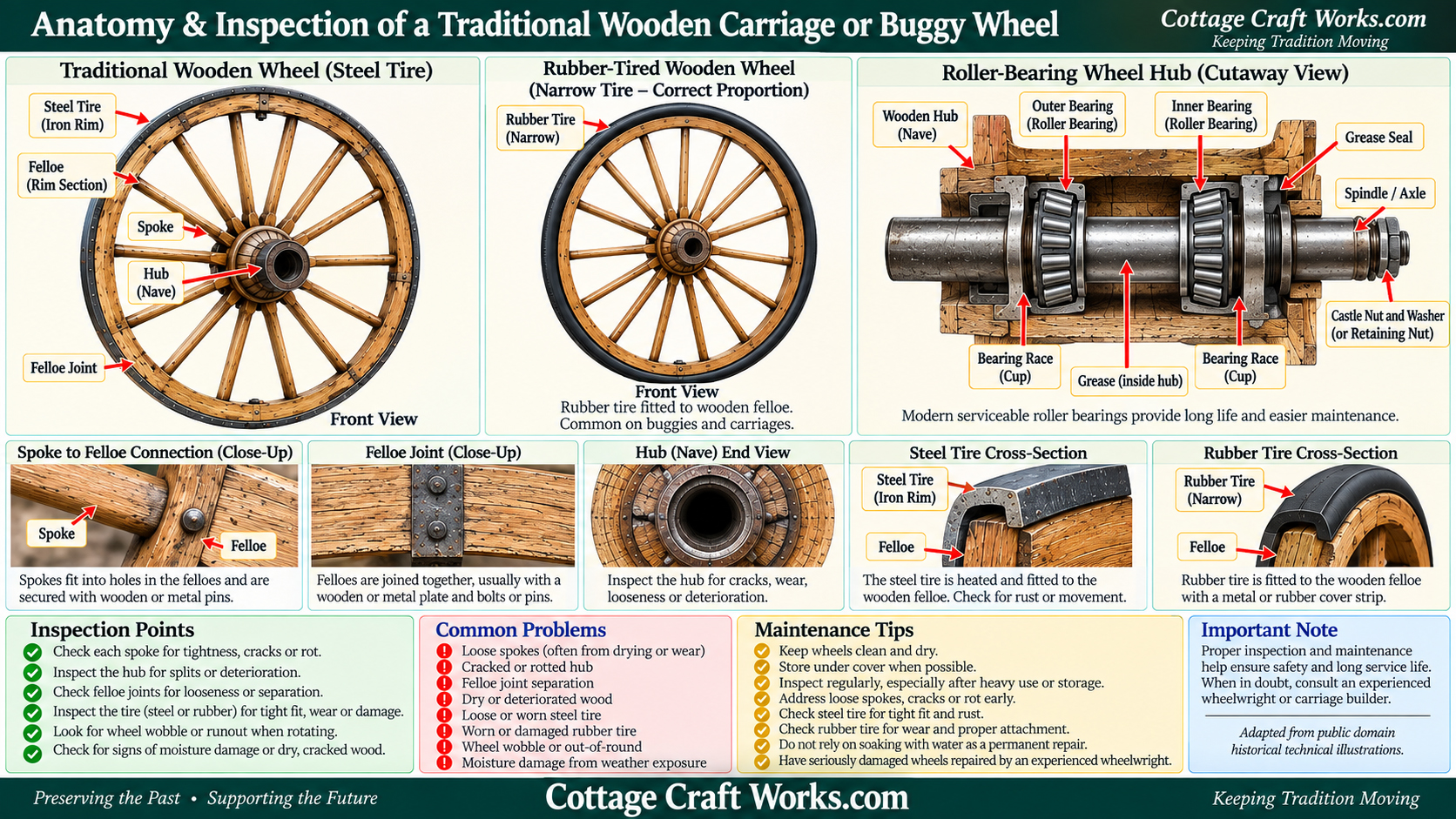
A traditional wooden carriage or wagon wheel is a structural assembly. The hub or nave, spokes, felloes and outer tire depend on one another to remain tight, true and capable of carrying load. A loose spoke should therefore be treated as a symptom to investigate rather than as an isolated piece of wood that merely needs to be tightened.
Clemson University's conservation documentation of a historic wagon wheel identifies a white-oak hub, spokes, and felloes, along with an iron tread rim, hub band, and steel fasteners. The project also documents damage associated with changes between wet and dry conditions, illustrating why moisture history matters when evaluating old wooden wheels.
1. Know the Parts of a Wooden Wheel
|
Part |
Function / Inspection Focus |
|
Hub or nave |
Center of the wheel; carries the axle/bearing interface and spoke mortises. Inspect for splits, looseness, rot and movement. |
|
Spokes |
Transfer load between hub and rim. Inspect for cracks, looseness, damaged tenons and deterioration. |
|
Felloes |
Curved wooden rim segments receiving the spoke ends. Inspect joints, spoke mortises, splits and decay. |
|
Steel tire |
Protects the wooden rim and, in traditional construction, helps hold the wooden assembly tight. Inspect for looseness, damage and corrosion. |
|
Rubber tire/channel |
Where fitted, inspect rubber condition, attachment, and the wood or metal support beneath it. |
2. Inspect the Wheel on the Vehicle
1. Park the vehicle on firm, level ground and prevent movement.
2. Look at each wheel from the front and side. Compare its position with the other wheels.
3. Rotate the wheel slowly where this can be done safely and look for side-to-side wobble, out-of-round movement, or a shifting tire.
4. Listen for clicking or creaking that may indicate movement between wooden components.
5. Check the hub for cracks and movement relative to the axle or bearing.
6. Inspect every spoke from hub to felloe, then inspect each felloe joint and the complete circumference of the tire.
3. Checking Spokes
A sound spoke should be firmly seated at both ends and free of significant cracks, crushing or rot. Compare spokes around the wheel rather than judging one in isolation. Movement at several spokes may indicate a wheel-wide fit problem involving the hub, felloes, or tire.
· Look closely where each spoke enters the hub.
· Check where the outer spoke end enters the felloe.
· Look for splits running with the grain.
· Check for dark, soft, or deteriorated wood around joints.
· Investigate repeated loosening rather than repeatedly applying a temporary tightening method.
4. Hub or Nave Inspection
The hub contains multiple spoke mortises and carries the wheel on the axle or bearing system. Splitting between mortises, movement around the axle/bearing interface, deteriorated wood, or loose hub bands can compromise the entire wheel. Hub problems generally warrant wheelwright evaluation because repair affects wheel geometry and spoke fit.
5. Felloe Inspection
Felloes are the curved wooden segments that make up the outer rim of a spoked wheel.
Inspect the wooden rim segments for splits, open joints, crushed spoke mortises, and deterioration beneath or adjacent to the tire. A failing felloe cannot properly support the spoke ends or maintain the wheel's shape.
6. Steel-Tired Wooden Wheels
In traditional construction, the steel tire is fitted tightly around the wooden rim. Its fit contributes to the integrity of the wheel assembly. Investigate any tire that visibly moves, rings differently in one area, shows a gap, or no longer remains securely seated before continued use.
Do not attempt to correct a loose tire by improvised welding, shimming, or other methods that can damage the wooden wheel or alter tire tension. Traditional tire shrinking and wheel rebuilding are wheelwright operations.
7. Rubber-Tired Wooden Wheels
Rubber-tired wooden wheels require inspection of both the tire and the underlying wheel. Check for separated or badly worn rubber, loose channels or fasteners, corrosion of metal channels, and hidden deterioration where moisture may be retained against the wooden felloe.
8. Why Wooden Wheels Become Loose
Wood changes dimension as its moisture content changes. Age, repeated wet/dry cycles, prolonged dry storage, joint wear, deteriorated wood, and changes in tire fit can all contribute to looseness. Evaluate a loose wheel as a complete assembly.
9. Should You Soak a Loose Wooden Wheel?
Wetting dry wood can cause temporary swelling, which may make a loose wheel feel tighter for a time. This does not restore worn joints, repair rot, replace damaged spokes, correct a cracked hub or restore proper tire fit.
For a working carriage or buggy, soaking should not be treated as a structural repair. Repeated wetting and drying also subjects the wood to additional dimensional change. Diagnose and correct persistent looseness with proper wheel repair.
10. Storage and Moisture
· Store wooden wheels under cover and away from standing water.
· Avoid long-term storage in conditions that repeatedly swing between very wet and very dry.
· Keep mud and manure from remaining packed around wheel components.
· Allow a wet vehicle to dry with ventilation rather than sealing moisture beneath a cover.
· Inspect wheels again after long storage before road use.
11. When to Stop Using the Wheel
· Persistent loose spokes or multiple moving spokes.
· Cracked or deteriorated hub/nave.
· Split or badly deteriorated felloes.
· Loose or displaced steel tire.
· Significant wheel wobble or loss of true.
· Evidence of rot at spoke joints.
· Damage following a hard impact.
· Any condition where the structural integrity of the wheel is uncertain.
12. When to Use a Wheelwright
A wheelwright understands the geometry and fit of the entire wheel, including hub mortises, spoke tenons, felloe joints, dish and tire fit. Approach structural wheel repairs as wheel repairs, not isolated woodworking tasks.
Wooden Wheel Inspection Checklist
· Hub/nave free of significant cracks and deterioration.
· No abnormal hub movement at the axle or bearing.
· All spokes visually sound and firmly seated.
· Spoke-to-hub and spoke-to-felloe joints intact.
· Felloes sound with joints closed and no serious splitting.
· Steel tire or rubber tire securely attached and in serviceable condition.
· Wheel rotates without significant wobble or irregular movement.
· No evidence of persistent looseness, rot, or recent impact damage.
Important Safety & Maintenance Disclaimer
This Cottage Craft Works resource is provided for general educational and informational purposes only. Horse-drawn carriages, buggies, wagons and carts vary substantially in age, construction, materials, wheel and axle design, steering systems, brakes, suspension, intended loads and operating conditions. A maintenance, inspection or repair procedure appropriate for one vehicle may not be appropriate for another.
Wheels, axles, bearings, hubs, fifth wheels, kingpins, steering components, brakes, springs, shafts, poles, wooden structural members and attachment hardware are safety-critical components. Failure or improper adjustment of these components can result in loss of vehicle control, property damage, serious injury, or death.
Always inspect the vehicle before use and follow the vehicle or component manufacturer's instructions when available. Properly support a raised vehicle before working underneath it or removing wheels. Do not rely solely on a jack or other lifting device to support a vehicle while performing maintenance.
Do not operate a horse-drawn vehicle when a wheel, axle, bearing, steering component, brake, shaft, pole, structural wooden member or other safety-critical component is damaged, excessively worn, loose, deteriorated or of questionable condition.
Repairs involving structural wooden wheels, hubs, spokes, felloes, shafts, poles, major body structures or specialized running gear should be performed or evaluated by an experienced wheelwright, carriage builder or other qualified craftsperson when the condition or proper repair procedure is uncertain.
Wooden Wheel Safety Warning
A wooden carriage or buggy wheel is a structural assembly in which the hub or nave, spokes, felloes and tire work together. A loose spoke may be evidence of drying, wear, improper tire fit, damaged joints, hub deterioration, felloe deterioration or other structural problems. Do not assume that tightening or swelling an individual component has corrected the underlying condition.
Soaking or wetting a loose wooden wheel may temporarily swell the wood but should not be considered a structural repair. Wheels with persistent loose spokes, cracked hubs, deteriorated felloes, loose tires, significant wobble or other questionable structural conditions should be removed from service and evaluated by an experienced wheelwright or qualified carriage-wheel repair professional.
Cottage Craft Works LLC assumes no responsibility or liability for injury, property damage, equipment damage or other loss resulting from the inspection, maintenance, repair, modification, installation or operation of horse-drawn vehicles or their components.
Reference Sources
The following public or institutional references were used as background for this educational resource. Vehicle-specific manufacturer instructions should take precedence when available.
· Clemson University — Wagon Wheel conservation project. Documents a historic white-oak hub, spoke and felloe assembly with iron/steel components and discusses damage associated with wet/dry condition changes.
· University of Maine Cooperative Extension — Wagon Safety, Bulletin #2337. Supports routine inspection, repair and maintenance before work-season use.
· CC0 / public-domain technical blueprint — Public-domain wooden cart wheel construction reference. Describes hub, spoke and felloe relationships and the traditional shrink-fit iron tire concept.
Photos
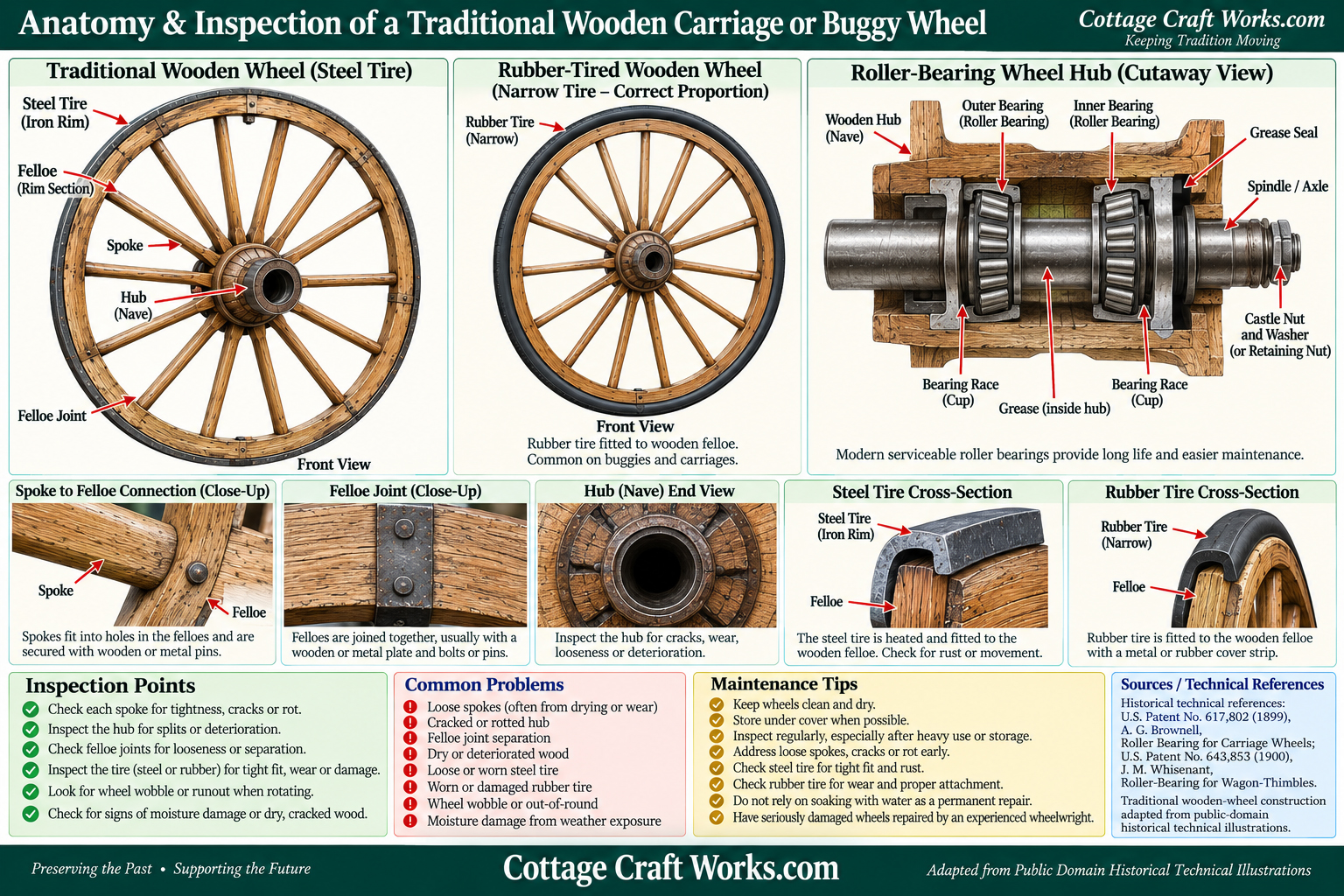
anatomy and Inspection of a wagon wheel 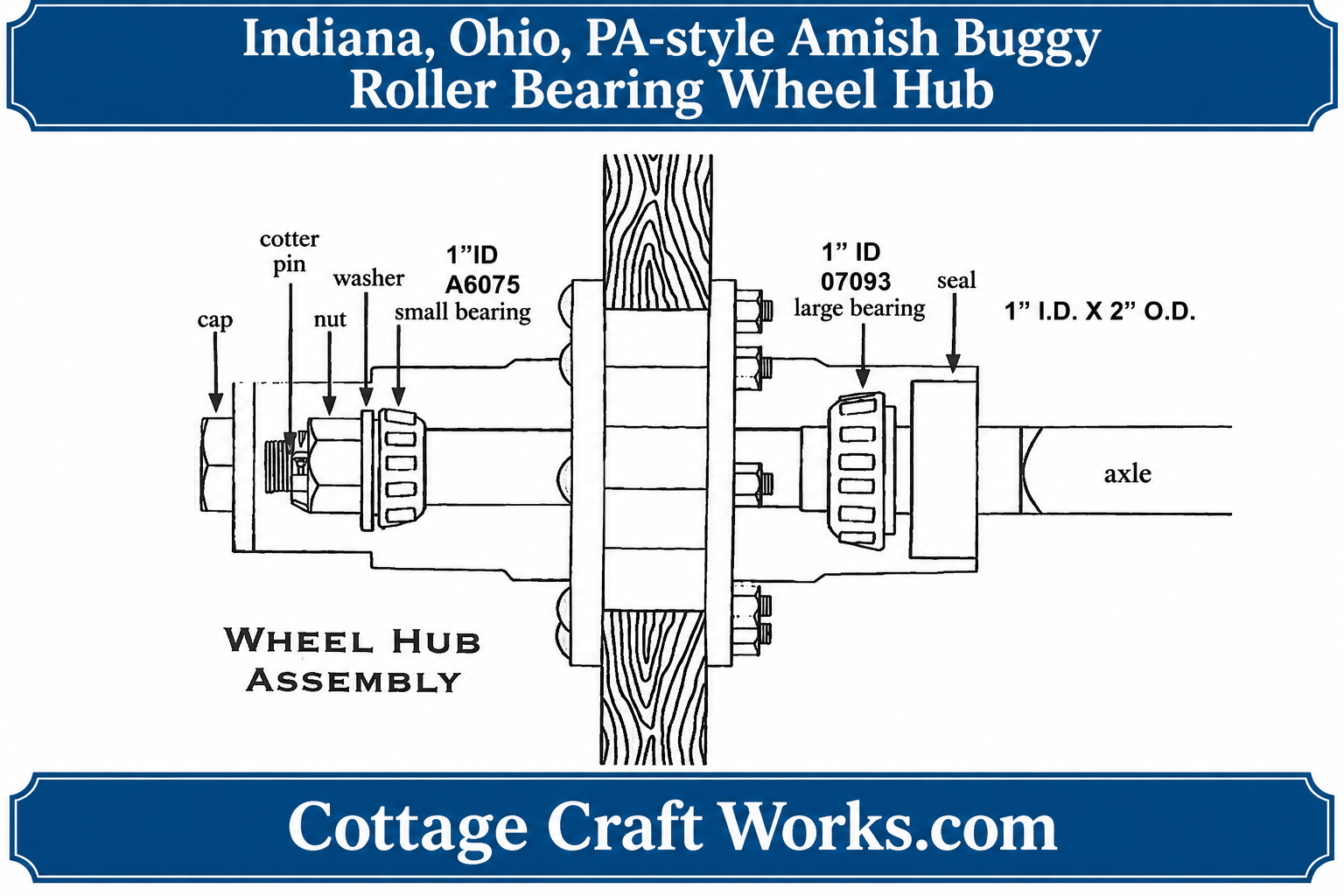
Amish Wood Wheel Roller Bearing Hub 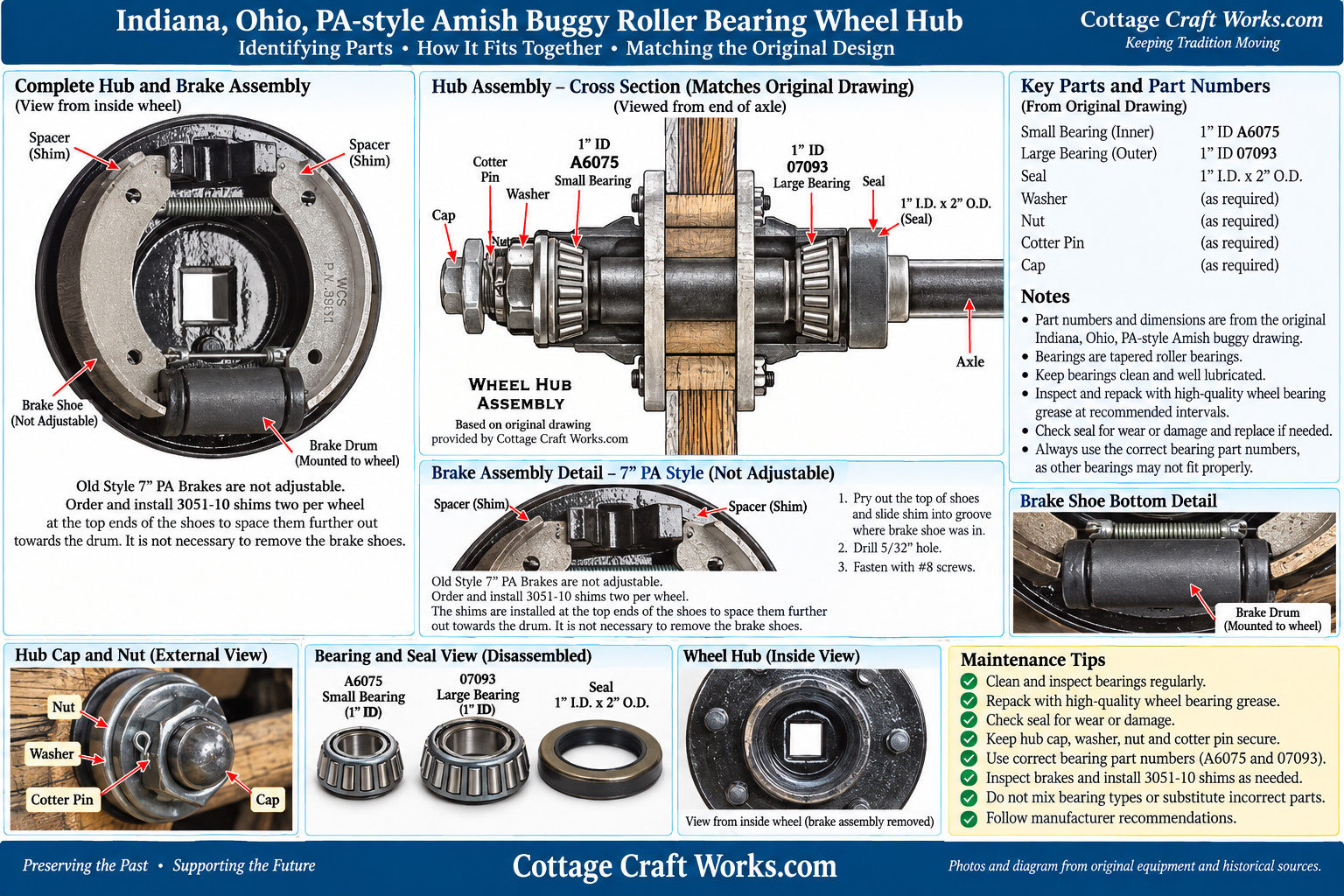
Indian, Ohio, PA-Style Amish Roller Bearing Wheel Hub